
Search Grand Junction Marriage License
Marriage licenses in Grand Junction are issued by the Mesa County Clerk and Recorder, serving the largest city on Colorado's Western Slope.
Grand Junction Quick Facts
Mesa County Clerk and Recorder
Grand Junction residents obtain marriage licenses from Mesa County. The county clerk's office handles all marriage and civil union licenses for Mesa County, which includes Grand Junction and the surrounding Western Slope region. The license fee is $30.00, which is the statewide rate set by Colorado statute.
All 64 Colorado counties charge the same fee for marriage licenses. This is not a local decision but a state requirement. The fee covers the cost of processing your application and issuing the license. Once you get a license from Mesa County, you can use it for ceremonies anywhere in Colorado.
Contact the Mesa County Clerk and Recorder for current office hours and location information. Like many Colorado counties, Mesa County may require appointments for marriage license services. Call ahead to confirm whether you need an appointment or if walk-ins are accepted. This helps ensure you can get your license when you need it.
How to Apply for Your License
Both applicants must appear in person when applying for a marriage license. This is a state requirement under C.R.S. 14-2-105. You cannot apply by mail or phone. Some counties allow Colorado residents to apply remotely via video, but out-of-state applicants must always appear in person.
Bring valid photo identification. Colorado accepts driver's licenses, passports, state-issued IDs, military IDs, and original or certified birth certificates. Note that Colorado licenses with a black strip reading "Not valid for federal identification" may not be accepted at some counties. Call Mesa County ahead of time to confirm if you have this type of license.
You need your Social Security Number or at least the last four digits. If you don't have a Social Security Number, you must complete an affidavit explaining why. The clerk's office provides this form. You can sign it in front of a deputy county clerk during your application or get it notarized beforehand.
Bring information about your parents, including their full names and addresses if known. Father's information should include first, middle, and last name. Mother's information should include first, middle, maiden name, and last name. This is a state requirement. If you don't know some of this information, explain why on the application.
Eligibility Requirements
Both parties must be at least 18 years old to apply without restrictions. Colorado prohibits marriage for anyone under 16 years old. Those who are 16 or 17 can marry only with a judicial court order from juvenile court. This requires a formal hearing and is rarely granted. Parental consent alone is not sufficient since HB19-1316 passed in 2019.
You don't need to be a Colorado resident to get a marriage license here. Grand Junction residents and out-of-state couples can all apply at the Mesa County office. There's no waiting period between when you apply and when you can use your license. No blood test is required. The license is valid immediately when issued.
If either person was married before, bring information about that prior marriage. You need the divorce date, the name of the court that granted the divorce, and the city and state where that court is located. All divorces must be final before you can apply for a new license. If your former spouse died, you may need to provide that information as well.
Colorado prohibits certain marriages under C.R.S. 14-2-110. You cannot marry if you're still married to someone else. Marriage is prohibited between ancestor and descendant, between brother and sister (half or whole blood), and between uncle and niece or aunt and nephew. Marriage between cousins is permitted in Colorado.
License Validity and Deadlines
Your license is valid for 35 days from the date of issue per C.R.S. 14-2-107. You can marry the same day you receive your license or wait up to 35 days. If you don't use it within 35 days, it becomes void. You must return unused licenses to the county clerk for cancellation. No refund is given for unused licenses.
After your ceremony, the completed certificate must be returned to Mesa County within 63 days. This deadline applies to all Colorado marriages under C.R.S. 14-2-109. Late returns result in fees. The minimum late fee is $20. An additional $5 per day is charged up to a maximum total of $50.
Plan ahead to avoid late fees. After your ceremony, get the certificate completed by your officiant or complete it yourselves if you self-solemnized. Return it promptly to Mesa County. Anyone can return the license on your behalf. It doesn't have to be returned by one of the parties to the marriage.
Types of Marriage Ceremonies
Colorado recognizes three types of marriage ceremonies. Religious ceremonies involve an officiant from a recognized religious denomination or Indian nation. Civil ceremonies are performed by judges, magistrates, retired judges, or other authorized public officials. Self-solemnization means you marry yourselves without an officiant, which is legal in Colorado under C.R.S. 14-2-109.
Colorado is one of only a few states that allows self-solemnization. This means you don't need anyone else present at your ceremony. You simply complete the marriage certificate yourselves. Both parties sign in the section where an officiant would normally sign. Write "The Parties to the Marriage" as the title.
Witnesses are not required for any type of ceremony in Colorado. If you want witnesses, there's no age limit. Children can sign as witnesses if you wish to include them in your ceremony.
Not everyone can sign as an officiant. Friends or relatives cannot solemnize your marriage unless they are authorized to conduct religious or civil ceremonies in Colorado. The couple may solemnize their own marriage, but that doesn't mean a friend or relative can sign for them. Online ordinations may not be recognized unless the person is affiliated with an established religious organization.
Authorized Officiants
Per C.R.S. 14-2-109, marriages can be solemnized by a judge of a court, a court magistrate, a retired judge, a public official whose powers include solemnization of marriages, the parties to the marriage themselves, or in accordance with any mode of solemnization recognized by any religious denomination or Indian nation or tribe.
Religious officiants must be recognized by the organization that ordained them. Clergy from out-of-state need not be registered in Colorado. They can perform ceremonies in Colorado as long as their organization recognizes their authority.
For civil ceremonies in Grand Junction, contact local judges or magistrates. The clerk's office may be able to provide information about which judicial officers perform marriage ceremonies. Some judges offer this service during business hours, while others may accommodate weekend or evening ceremonies for a fee.
Completing and Recording Your Certificate
After your ceremony, the officiant completes the marriage certificate section of your license. If you self-solemnized, you complete this yourselves. The certificate must include the date of the ceremony, the time, the location, and the county where the ceremony occurred. Both parties must sign. The officiant signs and provides their title and contact information.
Return the completed license to Mesa County within 63 days. You can mail it to the clerk's office, drop it off in person during office hours, or use a drop box if the county has one. Check with the clerk about available return options.
There's no fee for recording your license if you return it on time. Once it's recorded, your marriage becomes part of the permanent public record. Mesa County will process your license and make it available for certified copies. If you need copies for name changes, benefits enrollment, or other purposes, you can order them after the license is recorded.
Proxy Marriages and Absentee Affidavits
Proxy marriages are allowed in limited circumstances under Colorado law. One party must be a Colorado resident. One party must be a member of the armed forces stationed abroad or a government contractor supporting military operations. Both parties must be at least 18 years old. Self-solemnization is not allowed for proxy marriages.
If either applicant cannot appear in person for the application due to military service or other valid reasons, the absent party must complete an absentee affidavit. This form must be notarized and is typically valid for 30 days from the notarization date. The present party brings the notarized affidavit to the clerk's office. Contact Mesa County for the required forms and specific instructions for proxy marriages and absentee applications.
Common Law Marriage
Colorado recognizes common law marriage. A common law marriage occurs when a couple has presented themselves and been acknowledged as a married couple, even though no ceremony or marriage license was obtained. There's no specific length of time required to establish a common law marriage in Colorado.
There's no such thing as a common law marriage license. If you want official documentation of a common law relationship, you can apply for a regular marriage license and then self-solemnize it. This creates an official record of your marriage date. Once recorded, the certificate serves as proof of your marriage for legal purposes.
The clerk and recorder office does not provide forms for establishing common law marriage. If you have questions about common law marriage, consult an attorney or visit the Colorado Attorney General's website for more information.
Civil Unions in Colorado
Mesa County also issues civil union licenses. A civil union is a relationship established by two eligible parties that entitles them to receive the benefits and protections of spouses. The process for obtaining a civil union license is identical to the marriage license process.
The fee is the same $30.00. The validity period is the same 35 days. The application requirements are the same. Both parties must appear in person. The return deadline is the same 63 days after the ceremony. Choose the option that best fits your needs.
Getting Copies of Your License
Once your license is recorded, you can order certified copies from Mesa County. Contact the clerk's office for their fee schedule and ordering process. Most counties charge between $1.00 and $1.25 per certified copy. You may be able to request copies in person, by mail, or by phone.
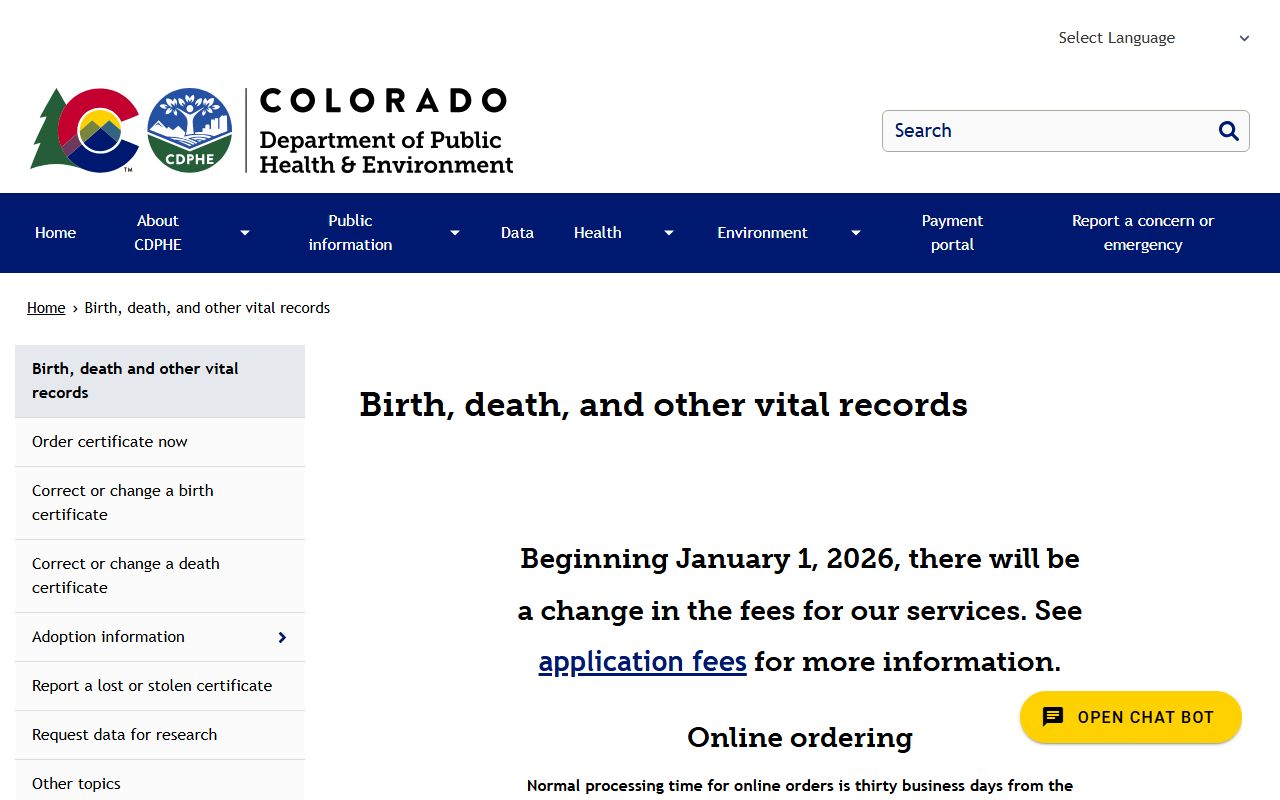
You can also get certified copies from the Colorado Department of Public Health and Environment Vital Records Section. State copies cost $17.00 for the first copy and $10.00 for additional copies ordered at the same time. Normal processing time for online orders is 30 business days. You can order online at www.vitalchek.com or call (866) 632-2604 or (866) 300-8540.
Marriage license applications are confidential under Colorado law. Only the parties to the marriage or those with a direct and tangible interest can access the application. The marriage certificate itself is public record and can be accessed by anyone. When you order copies, you're typically getting a copy of the recorded marriage certificate.
Using Your Marriage Certificate for Name Changes
If you plan to change your last name after marriage, you'll need certified copies of your marriage certificate. Most agencies and institutions require a certified copy, not a photocopy. Order several certified copies when you first record your license to save time later.
You'll typically need certified copies to update your Social Security card, driver's license, passport, bank accounts, credit cards, insurance policies, and employment records. Each agency may keep the copy you provide, so order enough copies for all the places you need to update.
Mesa County can provide certified copies immediately after your license is recorded. If you need copies right away for time-sensitive matters, ask the clerk's office about expedited processing or same-day copies.
Legal Assistance and Resources
For questions about marriage licenses in Mesa County, contact the clerk and recorder's office directly. They can answer questions about requirements, fees, appointment availability, and return options. Mesa County staff are familiar with Colorado marriage law and can help you understand the process.
If you need legal assistance with family law matters, Colorado Legal Services provides free or low-cost help to qualifying residents. The Colorado Bar Association offers referral services for private attorneys. For questions about Colorado marriage law, consult Title 14 Article 2 of the Colorado Revised Statutes at colorado.public.law.
Marriage Licenses on the Western Slope
Grand Junction is the largest city on Colorado's Western Slope. Mesa County serves a wide geographic area, including rural communities surrounding Grand Junction. The clerk's office is accustomed to serving couples from across the region, including those planning destination weddings in nearby areas.
If you're planning a wedding in the Grand Junction area but live elsewhere, you can get your license from Mesa County or any other Colorado county. A license from any county works for ceremonies anywhere in the state. Some couples choose to get their license in the county where they're having the ceremony, while others get it near their home. Both options are equally valid.
For destination weddings in Western Colorado, consider the unique self-solemnization option. This allows you to marry yourselves at scenic outdoor locations without needing to arrange for an officiant to travel to remote areas. Many Western Slope couples take advantage of this option for weddings in national parks, forests, and other natural settings.
Important Reminders
Remember that your Colorado marriage license is only valid for ceremonies that take place in Colorado. If you marry in another state, you need a license from that state. Once your Colorado marriage is recorded, however, all other states will recognize it under the Full Faith and Credit Clause of the U.S. Constitution.
Keep track of your 35-day validity period and your 63-day return deadline. Mark these dates on your calendar. If you're close to either deadline, contact the Mesa County clerk's office for guidance. Missing the return deadline results in late fees that could have been easily avoided with proper planning.
If you lose your license before your ceremony, contact Mesa County immediately. The county may be able to issue a replacement, though fees may apply. After your ceremony, if you lose your completed license before returning it, contact the officiant who signed it. They may be able to help reconstruct the necessary information.